Showing posts with label just what you wanted to know ;-) xoxo. Show all posts

September 2, 2013

Painting light into the canvas.


“Women in the 17th century are allowed to smoke, write, correspond with Descartes, wear spectacles, insult the Pope, and breast-feed babies.” -Titia Uylenburgh


“There is no history there are only historians…” -Peter Greenaway


From 1600-1680 we can put forward a compelling claim that Rembrandt is the greatest painter since the Renaissance and, that in the 1640’s Amsterdam is the center of the world, a city on the make with the foxes in the hen house.

The film Nightwatching is a creative response to Rembrandt's famous painting known as “The Night Watch” in a sense an extension of the painting. It dramatises the idea that this picture is a bristling, encoded denunciation of the grand gentlemen who commissioned it – that it effectively accuses them of being murderers, villains, rapists and thieves, and that Rembrandt's furious patrons vengefully connived at the artist's social and financial ruin.

In the movie someone says to Rembrandt of his painting: "You have made a frozen moment of theatre!" That could stand for a general description of Greenaway's film, but for the genuinely affecting account of Rembrandt and Saskia and the shadow of death that comes between them.

This intriguing and revelatory blend of human drama and art-history detective work deftly combines character study and cultural documentary shaped around a truly expressive performance from Martin Freeman as Rembrandt. What’s surprising (in the context of the filmmaker's often chilly past oeuvre) is the film’s genuine compassion for the sufferings of wives, maids and vulnerable orphans, adding an emotive underpinning to its sharp observations on the purpose of art and the nature of representation. 


June 12, 2012

Shall we? Dance!


Let’s talk about Fred. And his partners: Rita, Cyd, Paulette, Vera-Ellen, Nanette, the two Powells — Eleanor and Jane — Judy, Leslie, Audrey, numerous couches and chairs, several tables (dining and coffee), a British ceiling and one supremely fortunate coat rack. But mainly, of course, there was the divine Ginger, always magnificently dressed, occasionally, as in “Top Hat,” by three or four well-endowed ostriches.


While the Hays Office in the mid-’30s was in its most censorial early days, its enforcers changing any plotline or dialogue from which they could squeeze sexual innuendo, they managed in their verbal vigilance to, myopically, overlook Fred Astaire’s duets with Ginger Rogers, in which he demonstrates clearly, concisely, even overtly, every move any aspiring lover might do well to adopt. Put down the Kama Sutra and its impossible acrobatics, rent “The Gay Divorcee” and watch Astaire seduce a resistant Rogers, transforming her from a feisty, fast-talking, fast-walking, too-good-for-you dame into a dewy-eyed ingénue.   “That? Oh, that was nothing,” his modesty after brilliance his most disarming charm.

Astaire is our American Casanova camouflaged in tux and tails or sailor suit as a clean-cut gentleman, sometimes a naïve goof, zooming about in Hollywood musical fluff. Good, solid, still funny fluff. As “Night and Day” closes, Astaire lands Rogers gently on a steep incline — she’s mesmerized by the magician who just took her on the ride of her life — bends over her suggestively, pulls back and says, “Cigarette?” Mute and dazed, she declines. But we need Paul Henreid to light one for us. Yep, the Hays Office really did miss the dance. Thank God.

Rogers was Astaire’s best partner (the coat rack vying for a close second), though none, not even she, could match him as a dancer — watch how he takes off in his solos like Mercury in winged taps. But it didn’t matter: they were good and gorgeous, and he did the rest. Hermes Pan, Astaire’s longtime choreographic collaborator, said, “Except for times Fred worked with real professional dancers like Cyd Charisse, it was a 25-year war.” So why did these women look like goddesses with Astaire?

Because of Adele.

Adele? Yes, his sister, Adele. For the duration of their astonishing 27-year partnership, the longest in his life — it began when Fred was 5 and Adele 8 — she was the undisputed star of the duo. In her fascinating new book, “The Astaires,” the Australian theater historian Kathleen Riley describes the exploits of this brother-sister team in glorious detail. And it becomes clear that it was behind and beside, but never in front of, Adele that Fred learned not only how to dance, but how to present a woman, honor her and make her glow. It is now a mostly lost art, hard-won equality having removed woman’s pedestal and left her prevaricating in the ditch of parallelism.


He can certainly restore one’s faith in humanity should it, by chance, ever falter — or at least in one extraordinary human being’s capacity for beauty. “He is like Bach,” George Balanchine said. “Astaire has that same concentration of genius; there is so much of the dance in him that it has been distilled.”
Riley performs the great service of giving us the history before the history, of Fred and Adele, the biggest vaudeville and musical theater stars of their time. It’s a love story rarely told, of that between a sister and her brother, one bonded in blood but cemented by hoofing.

When the Astaires crossed the pond for the first time, in 1923, to star in “Stop Flirting” at the Shaftesbury in London, their popularity kicked into a high gear from which it never descended — until Adele retired eight years later to marry. The show ran for 16 months, and each performance included no fewer than 18 dances, a tour de force that left British critics reaching for biblical superlatives: “Nothing like them since the Flood.”


As the toasts of the town they cavorted with Noël Coward, the Prince of Wales (long before Mrs. Simpson) — he saw the show 10 times — and the prince’s three brothers, who ushered the young Americans about town to all the trendiest clubs, where Fred was caught dancing an “inappropriate” Charleston with Lady Edwina Mountbatten. When not dancing, the siblings endorsed shampoo, cold cream, pens, toothbrushes, bronchial pastilles and shoes. “Astairia” was afoot.


J. M. Barrie asked Adele to play Peter Pan (she couldn’t for contractual reasons), while P. G. Wodehouse, A. A. Milne, John Galsworthy, Hugh Walpole and Somerset Maugham became admirers and friends. Cecil Beaton likened Adele, “with her large amusing head on a minute exquisite little body,” to Felix the Cat, while another critic took a more existential tone: “Hers is not only the poetry of motion but its wit, its malice, its humor.”

While there is, sadly, no footage of Fred and Adele dancing together, there is one other way, besides Nathan’s glorious flurries, to reach back in time and touch her, via a handful of audio recordings of the Astaires singing, made in the late 1920s. In “Funny Face” — written for them — they sing to each other, starting with Fred: “You have all the qualities of Peter Pan / . . . You’re a cutie / With more than beauty / You’ve got such a lot / of Personal-i-T-N-T.”

Riley’s book makes clear that during those three decades of dancing with Adele, Fred was driven, in part, by the belief that he was “a detriment to my sister,” and thus honed his craft on so many levels, devising new levels in the process, that he became a creature, like Mayakovsky’s “cloud in trousers,” beyond his sister’s obviously radiant, though possibly only-of-her-time, talent. While Adele charmed them in the spotlight, her brother became an artist of the highest order.


When Astaire was given a Life Achievement Award by the American Film Institute, in 1981, he was 81 years old. As he took the stage a single ring shone on his elegant hands: the gold signet pinky ring that Adele had given him in London over 50 years earlier. This ring can be seen in virtually all his films, circling his finger as he circles the waists of one beautiful woman after another. “My sister, Adele,” he said in his unscripted speech, “was mostly responsible for my being in show business. She was the whole show, she really was. In all the vaudeville acts we had and the musical comedies we did together, Delly was the one that was the shining light and I was just there pushing away.”

Just pushing away. Like Bach.

April 2, 2012

The Paradox of Human Nature.


“The Paradox of Love,” reveals that French men are far from being the world's best swordsmen.  So much for an accent being a sexual aphrodisiac. It turns out that consuming large quantities of red wine and cheese at 10 p.m. does not have the same impact as consuming several jars of Viagra. On the contrary, it makes men want to go to straight to sleep. 

“The Paradox of Love,” by Pascal Bruckner, is an urbane but unsparing portrait of the way the French love and suggests that sophistication has as many pitfalls as naiveté.  Among the many subjects of Bruckner’s highly readable meditation is a section titled “Europe, the United States: Different Taboos,” in which he marvels at the parade of American sex scandals — Clarence Thomas, Bill Clinton, Eliot Spitzer. All this “strikes French people as grotesque,” Bruckner writes. “On the moral level…one can only urge Americans to learn from the Old World how to be temperate.” Yet Bruckner also suggests that all is not entirely well with the French libido, either. It is not a coincidence that the most famous living French writer, Michel Houellebecq, got that way by writing novels full of sexual despair, in which unattractive men, edged out of sexual competition, patronize prostitutes or succumb to sheer nihilism. Bruckner confirms that there is indeed a “paradox” about today’s laissez-faire sexual mores in Europe: The freedom it offers is exactly the freedom of the market, in which there are always winners and losers. “Rejection is so terrible in democratic countries because it cannot be blamed on the wickedness of the state or ukases issued by a church. If I am not received with open arms, I have only myself to blame; I may be dying of desire, but it is my being as such that leaves the other person cold. The judgment is as final as one handed down by a court: no thanks, not you.”


What’s more, even as Bruckner embraces the ideology of romantic love — “a whole erotics, love that makes us as much as we make it” — he shows how the lifelong pursuit of passion exacts an awful toll on relationships. “In some Western European countries marriage has become pointless,” he writes. “Instead of the conjugal straitjacket,” people prefer “a light coat that one can change at will.” After all, if the delight of new love is the highest of human experiences, then a relationship of more than a year or two is simply a kind of martyrdom: “Our romances have never had such short lives.” This is a romantic “poverty that is more insidious than any other, because it arises from satiation, not from lack.”


Pascal Bruckner is the award-winning author of many books of fiction and nonfiction, including the novel Bitter Moon, which was made into a film by Roman Polanski. Bruckner's nonfiction books include Perpetual Euphoria (Princeton) and The Tyranny of Guilt.


February 27, 2012

Jumping the Abbey


“Jumping the shark” is an idiom used to describe the moment in the evolution of a television show when it begins a decline in quality that is beyond recovery. It is synonymous with the phrase, “the beginning of the end.”  —Wikipedia

It is puzzling that there should be no close equivalent in other European cultures for the English country house drama, as known through novel, film, television series, and the stage.
English it is—not, for once, more correctly British. A Scottish country house would imply a very different kind of story, while a Welsh country house (on any great scale) is a rarity. The French and Germans have their  country houses in plenty, but are too discreet to prompt such universal fiction. Steam trains do not draw up at local Spanish or Italian stations, bringing the weekend guests. There are few manservants laying out the clothes before dinner in Belgium. One wonders really how Europe managed at all.
The greatest rival to the English country house tradition is the Russian, with its rich suggestions of a feudal system in decline, and with its great questions hanging in the air: How shall I live to some purpose? How can I reform the world I know? Those who ask such questions may be querulous and ineffectual, but the questions themselves are intelligent and profound, whereas the great questions that hang over the English country house come, for the most part, from the far side of stupid: Can I score a personal triumph at the flower show while forgoing first prize for my roses? Can I secure my lord’s affection by pretending to go rescue his dog? (The answer Downto(w)n Abbey offers is yes in both cases.)
Among the by-products of the series, one book stands out, Margaret Powell’s Below Stairs, which in its latest incarnation bears the subtitle “The Classic Kitchen Maid’s Memoir That Inspired Upstairs, Downstairs and Downton Abbey.”
Powell was born in 1907, and what she describes in this memoir is an early life in service in the years after World War I, in London and on the south coast of England (nothing nearly as glamorous as Downto(w)n Abbey). First published in 1968, this appears to be a very honorable example of the editor’s art (the copyright line is shared with the dedicatee, Leigh Crutchley).
Powell had as a child won a scholarship that her parents’ poverty prevented her taking up. Work as a kitchen maid came as a prelude to marriage and motherhood. The impulse to resume her education came from the desire to keep up with the conversations of her children, simply to understand what they were discussing when they talked about history, astronomy, or French. Clearly Powell had narrowly missed, in early life, the chance to become a teacher. So this is a book about class. Clearly, too, wherever her education had taken her, she would have been forced to choose between marriage and a job. Married women simply didn’t go out to work, then, she reminds us:  “Working-class husbands bitterly resented the very thought that their wives should have to work outside the home. It seemed to cast a slur on the husband and implied that he wasn’t capable of keeping you.”
A tribute then to the achievements of adult education.

December 27, 2011

Wisdom, anyone?

I haven't been that high on a coffee table book in a long time. They're often heavy but thin, if you know what I mean. But this year I'm really enjoying WISDOM: The Greatest Gift One Generation can Give To Another, by Andrew Zuckerman. I was a bit worried when I cracked this tome open; the sap potential was high. I ordered it on a hunch, because I loved Zuckerman's book, Music.


But when I flipped it open I knew I was in for a fascinating read. The interviews are thoughtful and generous. This is a book to be savored. For generations.  I plan to gift it to my godchildren.  But this copy is going to be mine for a while before I let it out of my hands.

December 8, 2011

In Search of a Silent Night


Dreaded newscasts and endless loops of Christmas jingles (you know, that tinny, badly arranged, flat, featureless cacophony of sound) you hear in all the public places, has me longing for John Cage’s Silent Prayer, “a piece of uninterrupted silence” that he intended to sell to Muzak as “an attempt to break through the din of mid-century American culture . . . and to present the beauty that comes out of stillness.”

While Cage didn’t complete Silent Prayer, we do have 4’33" (that is four minutes and 33 seconds of an orchestra not playing anything).  
How much more delightful it was to sit after dinner and compile my winter reading list.  A few chocolates, glass of mulled wine and a CD playing 4’33”. Bliss.


To whit, the pile (you ask for it):

The Life and Opinions of Maf the Dog, and of His Friend Marilyn Monroe
Andrew O’Hagan
“Marilyn took me everywhere.  We had a lot of fun going up and down the avenues. . . . If she brought out the actor in me then it might be said that I brought out the philosopher in her.”
So the narrator Mafia Honey (Maf, for short), a Maltese terrier given to Marilyn Monroe in 1960 by her friend Frank Sinatra. 


Epitaphs to Remember: Remarkable Inscriptions from New England Gravestones
Janet Greene

This is a surprisingly funny little book comprised of over 200 inscriptions, dating from the seventeenth century to the mid-1950’s it offers a unique look at our culture’s perspective on life and death.  For those of us who’ve been known to traipse around old cemeteries on sunny afternoons, this book is a must-have.


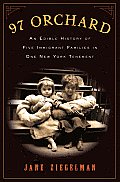
97 Orchard: An Edible History of Five Immigrant Families in One New York Tenement
Jane Ziegelman

Jane Ziegelman set out to tell the remarkable true story of the Age of Migration in America from the intimate perspective (on the food prepared in the cramped kitchens) of five families of different ethnicity's-German, Irish, German Jewish, Russian-Lithuanian Jewish, and Italian-all occupied the same tenement building in New York’s Lower East Side sometime between 1863 and 1935.  This read will be a delectable combination of cultural and culinary history.


The Lost German Slave Girl: The Extraordinary True Story of Sally Miller and Her Fight for Freedom in Old New Orleans
John Bailey

The Question of Sally’s identity and right to be free was brought to trial, ensnaring the best legal minds in Louisiana, the cream of New Orleans society, and the sizable German immigrant population.  Over the course of several months, the drama and tension generated by the case captivated the entire South.  This is a first-rate thriller, only more amazing for being true. 
Clive’s recommendation


The Gardens of Kyoto
Kate Walbert
“I had a cousin, Randall, killed on Iwo Jima. Have I told you?”


The story begins with Ellen’s affectionate relationship with her pensive cousin Randall, who, as a teenager, is killed in World War II.  Shortly after Ellen receives a package that includes the boy’s diary and his most treasured book, The Gardens of Kyoto. What she discovers within each volume affects her profoundly as she comes of age in 1950’s America.


Whether your holiday is Christmas, or another, or none at all, I have suggested for you the words—and the silences—that may bring you joy.


November 26, 2011

Margin Call(ed)


MARGIN CALL-
A broker's demand on an investor using margin to deposit additional money or securities so that the margin account is brought up to the minimum maintenance margin. Margin calls occur when an account value depresses to a value calculated by the broker's particular formula.


So your firm is leveraged 40 to 1. And its holdings are shaky - those damned European investments. Regulators show up to make sure you have enough capital to be legit. You’re ready for them -the day before, you moved funds to cover yourself.
But now Europe sinks further. Your investments there are worth a fraction of the $6.3 billion bet you made. Frantically, you try to sell parts of the firm, then the whole thing. Meanwhile, your clients are pulling their money as fast as they can --- to slow the drain, you stop wiring funds and start mailing checks.
Nothing works. You declare bankruptcy. Government agents swoop in - and can’t locate $600 million in client funds. Crazy! Where did $600 million go?
You resign. Because that’s what CEOs should do when it gets this bad. (Magnanimously, you refuse to take the $12.1 million payout specified in your contract. The checks you mailed to your customers? They bounced.) Now you must decide whether to testify at a government hearing or take the Fifth Amendment, a virtual admission of guilt.
A movie plot?  Not at all. This is what happened in 2008, just with mortgage-backed securities as the falling knife and Lehman Brothers and Bear Stearns as the first domino's. But yes, this is, in broad strokes, the story of “Margin Call.”
It’s also a story in the news -and the CEO I’m talking about here is Jon Corzine, former Governor of New Jersey and onetime CEO of Goldman Sachs.
I don’t imagine Corzine would like to see a movie about his company, but you might - and you can stream it, or see it at a local theatre where it is still playing.
Why see “Margin Call”? As the poster says, “Something big is going down.” Sadly, financial powerhouses can take you down with them; it’s good to know how these things happen. And they will happen again.
The first great thing about this nail-biter of a movie is that there are no easy-to-spot villains. Terrible things happen -this is Wall Street, where clients have become counter-parties and it makes perfect sense to bundle a bunch of crap, tie a ribbon around it and hawk it, even as you are selling it short in the firm’s account because you know it’s going to crash and burn. So what? The counter-parties are adults. No one held a gun to their heads. That’s why, in the preview, I see the key line as Jeremy Irons saying, as only he can, “That we may survive.”
Stanley Tucci, Kevin Spacey, Simon Baker and Demi Moore all have their roles to play. But the overview belongs to Irons, as the head of the firm:
“So you think we might have put a few people out of business today. That it’s all for naught. You’ve been doing that every day for almost forty years, Sam. And if this is all for naught, then so is everything out there. It’s just money; it’s made up. Pieces of paper with pictures on it so we don’t have to kill each other just to get something to eat. It’s not wrong. And it’s certainly no different today than it’s ever been. 1637, 1797, 1819, ‘37,’ 57, ‘84, 1901, ‘07, ‘29, 1937, 1974, 1987- and whatever we want to call this. It’s all just the same thing over and over; we can’t help ourselves. And you and I can’t control it, or stop it, or even slow it. Or even ever-so-slightly alter it. We just react. And we make a lot of money if we get it right. And we get left by the side of the road if we get it wrong. And there have always been and there always will be the same percentage of winners and losers. Happy foxes and sad sacks. Fat cats and starving dogs in this world. Yeah, there may be more of us today than there’s ever been. But the percentages - they stay exactly the same.”
Grown-up talk. For grown-ups (and their smarter kids). So gather the clan, skip the shopping, and watch closely. Because this is going to happen again.

July 30, 2011

If we want things to stay as they are,...

...things will have to change.


Giuseppe di Lampedusa’s novel The Leopard was well-known by the time Luchino Visconti began working on his film of the same name. The book appeared in Italy in 1958 and was subsequently translated into many languages - a German version can be seen lying around in Visconti’s section of the film Boccaccio’70, released in 1962. Visconti's 1963 version of the novel features Burt Lancaster in a great visual performance. The music, cinematography and production design are superb, but it is appropriate this time around to note the special contribution of its prolific screenwriter. One of Visconti's regular screenwriters, Suso Cecchi D'Amico died last year at the age of 96 after collaborating, credited and uncredited, on many of the best Italian films. She suggested dropping the novel's modern epilogue and persuaded Visconti to conclude with the extended society ball in Palermo, which proofed one of the most remarkable and influential sequences in movie history.

The book and the new remastered Criterion Collection DVD release had been in my tbr/v stack. For various reasons, one, Sicily is on my agenda this fall, two, political posturings have made me look at both with renewed interest (the more things change...).  I had neither read the book nor seen the movie since their original publication/release.

I love the Italien version of the remastered DVD, which I viewed without subtitles, but with the excellent commentary from Peter Cowie.
The American version of the movie demonstrates perfectly the different sensibility.

 The fortunes of the two works have become entwined, so that they now seem commentaries on each other in different mediums, rather than the source for a film and the adaptation of a novel. Many have remarked on the affinities between Lampedusa and Visconti, with their interest in fading splendor and dying worlds, and there is no doubt that the film is intimately faithful to the spirit of the novel - even when it shifts time lines and details of dialogue, and inserts a whole battle sequence.

A movie audience, Visconti said in an interview, needs to see Garibaldi’s men fighting the soldiers of the Bourbon government in the streets of Palermo, and to see Tancredi Falconeri, the nephew of the prince of Salina, fighting alongside the revolutionaries, in order to perceive what is at stake - the disruptive power of the historical conjuncture and the real risk Tancredi is running as the old order is overturned and a new Italy is born.

Both novel and film are ironic, elegiac, stately, and dedicated to a luxurious mourning of a lost past. But the loss and the past are different in each case, and the film is a good deal more political than the novel and more political than it may look at first sight. The most magnificent moments in the book involve a movement that Visconti does not make, and that a film, perhaps, cannot make persuasively: the flash-forward in time, the long look at the future beyond the story currently being told. We learn, for example, that the days of the engagement of Tancredi to Angelica, the daughter of the scheming Don Calogero - a sequence of games and kisses played out in the dusty and abandoned rooms of the prince’s seemingly endless house at Donnafugata - were the best days of their lives, because they were a time of unsatisfied, and therefore ever present, desire, to be matched by nothing in their later live: “Those days were the preparation for their marriage, which, even erotically, was not a success; a preparation, however, in a way sufficient to itself, exquisite and brief; like those melodies that outlive the forgotten works they belong to.” The long view doesn’t destroy the short view, but it draws out its sheer fragility.


Visconti’s film memorably records this romance and lingers with the lovers in the old rooms of the vast and ancient house, but the director has nothing to say about their future failures: his eye is firmly on the present, on the allure of the couple, on Tancredi’s slightly too easy charm, on Angelica’s slightly too petulant beauty. The impecunious Tancredi, with the prince’s blessing, is marrying money; more than that, he is buying his way into a position of influence within the new Italy. In the novel, the prince thinks Tancredi’s behavior is a little “ignoble” but admires the young man’s grasp of historical reality and allows his affection for him to quiet his scruples. The film identifies less closely with the prince’s point of view-it is about him, so to speak, but not an endorsement of his thinking, and if he is its visual center, Tancredi is the focus of its most troubling questions. It is through the modulations of Tancredi’s position, through his charm and his ruthlessness, that we understand the subtle political register of the film.

The convergence and divergence of Lampedusa and Visconti are particularly interesting here. Lampedusa was a Sicilian aristocrat deeply skeptical about progress; Visconti was a northern aristocrat deeply dedicated to it. But Lampedusa was too thoughtful a conservative to believe he could simply cling to the past, and Visconti was too intelligent a radical to believe all changes were for the better.

Burt Lancaster brings to the role of the prince an extraordinary physical presence and a remarkable sense of the difficulty of growing old and losing political prestige - his graceful waltz with Angelica in the film’s fabulous ball scene, tenderly photographed by Giuseppe Rotunno, is the last dance of a whole social order. In this interpretation of the prince, we see high style and perfect grace, but in the end, he is leaving this world and we are still living in it. Some critics have felt that the film is too much about the twentieth century, rather than the nineteenth - intimately, if indirectly, concerned with Italy’s relation to Europe as a whole in the early 1960s, with that later version of a conflict between a modernizing present and a vanishing past. Visconti himself, however, doesn’t make the distinction. He said that, throughout the making of the film, he asked himself whether the opportunistic Tancredi, if he had been born later, would have become a fascist. This is a question, not an answer; a fear, not an accusation. Tancredi’s charm and style are real, as is his deep affection for his uncle. But the question clearly haunts the whole film. The query is posed most sharply through a sequence of cuts and juxtapositions, as befits a great movie. As the prince says good-bye to Chevelley, the representative of the parliamentary government of the united Italy, who has offered him a place in the newly constituted Senate - he has politely refused - he agrees that changes are coming but says they will be for the worse. “We were the leopards, the lions,” he says. “Those who will take our place will be jackals, hyenas.” Dismissive enough, but the prince goes on: “And all of us-leopards, lions, jackals, and sheep-we’ll go on thinking ourselves the salt of the earth.”
  
Chevelley’s coach leaves and the next shot is a hot Sicilian countryside, with laborers vigorously digging. Over this image, we hear the rising sounds of an orchestra, and the next shot takes us to an elaborate ball in a palace in Palermo. The implication is that once the leopards and the jackals have started mingling, it will be hard to tell who is who. It’s clear that Sicily won’t change much, but the jackals will
certainly do well for themselves. More importantly, two extraordinary worlds will have died: the old order, represented (at its best) by the prince, and revolutionary Italy, represented by the now wounded and sidelined Garibaldi. At the ball, we hear of Garibaldi’s defeat by the soldiers of the very government he helped put in place, and of the promised execution of several of his supporters at dawn. A good thing, too, Tancredi, the ex-revolutionary, says: “It’s true, the new kingdom needs law and order.” He is lying on a sofa as he says this, the image of elegance and freedom from care. In the last images of the film, dawn has come, the ball is over. On his way home, the prince kneels in the street as a priest hurries past, taking the sacraments to a dying man. In a coach, Tancredi, Angelica, and her father look tired and happy as they hear the sounds of the firing squad close by. The prince rises and walks slowly away and vanishes into a dark alley.

“For things to remain the same, everything must change.” Spoken near the beginning of the film, the famous catchphrase simply suggests adaptation. For the prince and his class, a modified monarchy is better than a republic. As it echoes through the film, the phrase comes to mean something very different and gets close to the heart of Visconti’s criticism of modern Italy. It means that anything goes as long as we get to stay at the top of the political pile-whoever “we” are. This is not the prince’s world, but it is Tancredi’s. “You wouldn’t have spoken like that once,” one of the prince’s daughters says to Tancredi at the ball, when he talks so casually of the need for (and the cost of) law and order. “You’re wrong, my dear,” he answers. “I’ve always spoken like that.” And he has. He has changed his opinions and allegiances, but he has always spoken like a man who knows what’s necessary - for him and, as Visconti would say, for the thousands like him to be found in many times and many places.